


Chief Minister Devendra Fadnavis inaugurated the bypass on Maharashtra Day. The result: the Pune-to-Mumbai journey is 25 to 30 minutes shorter on every single trip. This guide explains what the Missing Link actually is, how much time you will save, what the new rules are for travellers, and what it means when you next book a cab from Pune to Mumbai airport.
What Is the Mumbai–Pune Expressway Missing Link?
The Yashwantrao Chavan Mumbai–Pune Expressway has been India's first access-controlled six-lane highway since 2002. For 23 years, however, it had one unresolved weak point: the Khandala ghat section between Khalapur and Lonavala. This winding, steeply graded stretch forced fast expressway traffic onto narrow curves where heavy trucks slowed to 30 km/h, triggering kilometre-long backlogs. During monsoon season, rockfalls and landslides routinely shut the ghat entirely.
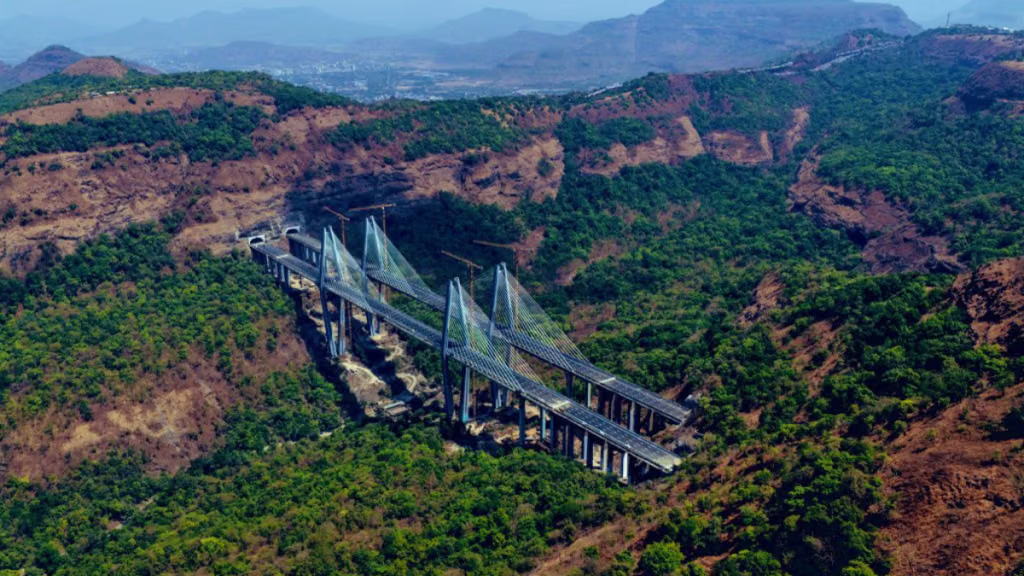
The Missing Link is the bypass that closes that gap. Built by the Maharashtra State Road Development Corporation (MSRDC), it is a 13.3 km, 8-lane, access-controlled highway connecting Khopoli in Raigad district to Kusgaon in Pune district. It tunnels straight through the Sahyadri ranges rather than crawling around them.
Key Engineering Facts
- The project includes a 13.3 km greenfield bypass corridor along with 6.5 km of capacity enhancement on the existing expressway.
- Twin tunnels: The centrepiece is an 8.92 km twin tunnel with a record-breaking width of 22.33 metres — officially certified by Guinness World Records as the world's widest underground road tunnel.
- Cable-stayed bridge: A 650-metre cable-stayed bridge over Tiger Valley with 182-metre pylons, the tallest pylon on any Indian road bridge.
- Speed limit: 100 km/h for cars, 80 km/h for buses, enforced by AI-powered ANPR cameras.
- Safety features: 24x7 CCTV surveillance, SOS panic buttons every 250 metres, pumped drainage and tunnel ventilation systems.
- Project cost: Rs 7,181 crore (revised from the originally sanctioned Rs 4,797.57 crore).
- Contractors: Navayuga Engineering Company Ltd. (tunnels, Package I) and Afcons Infrastructure Ltd. (viaducts and capacity augmentation, Package II).
How Much Time Does the Missing Link Actually Save?
The distance between Mumbai and Pune drops by approximately 6 km from roughly 155 km to around 149 km. The time saving, however, is far larger than 6 km would suggest, because the ghat section was not just long; it was slow and unpredictable.
| Factor | Before Missing Link | After Missing Link (2026) |
|---|---|---|
| Distance | ~155 km | ~149 km (6 km shorter) |
| Off-peak travel time | ~2.5 hrs | ~2 hrs |
| Peak/monsoon time | 3.5 – 5+ hrs | 2.5 – 3 hrs |
| Ghat bottleneck risk | Serious (accidents, landslides) | Bypassed entirely |
| Max speed in section | 60 km/h (ghat curves) | 100 km/h (tunnel) |
| Additional toll | N/A | No extra toll |
MSRDC's official estimate is 20–25 minutes saved; independent assessments place the gain closer to 30 minutes during peak hours. The real-world benefit is largest during monsoon weekends, when the old ghat section routinely added 45–60 extra minutes due to rockfalls, reduced visibility, and waterlogged roads. The new tunnels have dedicated drainage and ventilation systems that make them weather-independent.
For a traveller catching an early morning flight from Chhatrapati Shivaji Maharaj International Airport (CSMIA) or the new Navi Mumbai International Airport (NMIA), this half-hour gain is the difference between a relaxed departure and a stressful sprint through the terminal.
Travellers seeking a dependable Pune-to-Mumbai airport transfer can rely on Simran Travel for experienced drivers, transparent pricing, and punctual airport pickups via the new Missing Link route.
Who Can Use the Missing Link Right Now?
The Missing Link has opened in two phases, with vehicle restrictions applied for safety during the initial period.
Phase 1: May 1 – October 31, 2026
- Permitted: Light motor vehicles (cars, SUVs) and buses.
- Not permitted: Heavy cargo vehicles, trucks, and vehicles carrying flammable or hazardous materials.
- Speed limits: 100 km/h for cars; 80 km/h for buses.
- Toll: No additional toll charge. Toll rates at the existing Khalapur Toll Plaza will remain unchanged.
Vehicles not permitted in Phase 1 must continue to use the existing Khandala ghat route.
Phase 2: From November 2026
After six months of safety and traffic performance review, goods vehicles are expected to be permitted on the Missing Link from November 2026. Vehicles carrying flammable materials will remain prohibited regardless of phase.
Why the Khandala Ghat Was Such a Problem
To appreciate what has changed, it helps to understand the old bottleneck. At the Khalapur toll plaza near the Khandala exit, the six-lane Mumbai–Pune Expressway merged with the four-lane NH-48, effectively forcing ten lanes of traffic onto six lanes through sharp curves and a steep gradient.
The consequences were severe and predictable:
- Heavy vehicles slowed to under 30 km/h on the uphill gradient, creating multi-kilometre backlogs.
- The ghat section had one of the highest accident rates on the expressway due to curves, gradient changes, and mixed vehicle speeds.
- Monsoon landslides and rockfalls forced complete closure of both the Expressway and Old Highway (NH-48) for 30+ hours at a time — as recently as February 2026, a tanker accident near the Adoshi Tunnel shut the route for nearly 32–36 hours.
- Fog and heavy rain significantly reduced visibility, slowing traffic further.
The Missing Link bypass removes this section from the main traffic flow entirely, re-routing vehicles through the straight, well-lit tunnel at 100 km/h.
Driving the New Route: What to Expect
The Route at a Glance
Drivers using the Missing Link leave the existing expressway at Khopoli and join the new 8-lane access-controlled corridor. They pass through the twin tunnels, cross the Tiger Valley cable-stayed bridge, and rejoin the expressway near Kusgaon, bypassing the Khandala ghat section completely. The entire bypass is designed for continuous travel at up to 120 km/h where terrain allows.
Practical Tips for Your First Trip
- Ensure your FASTag has adequate balance before entering. FASTag readers at the new toll points were still being calibrated in the first weeks after opening; occasional short queues at entry/exit are normal while the system settles.
- Obey speed limits strictly. AI-powered ANPR cameras enforce 100 km/h for cars and 80 km/h for buses throughout the bypass.
- Do not attempt to enter if you are driving a heavy goods vehicle or carrying flammable cargo during Phase 1.
- Highway patrol presence inside the tunnels is higher than usual during the initial operational period.
- For current traffic conditions, check Google Maps or Waze before departure. The expressway handles over 1.5 lakh vehicles daily.
What This Means for Pune to Mumbai Airport Travellers
The most time-sensitive use case for any Pune–Mumbai traveller is catching a flight. Whether you are travelling to CSMIA (Terminal 1 or 2) or to the newer Navi Mumbai International Airport (NMIA) in Panvel, the Missing Link directly benefits your journey.
How the Time Saving Changes Airport Planning
- Earlier departure buffer: With 25–30 minutes back in hand, travellers no longer need to add an extra hour of buffer to account for a potential ghat jam.
- Monsoon reliability: The tunnel is weather-independent. A monsoon journey that previously risked hours of delay is now far more predictable.
- Night travel: The well-lit, camera-monitored tunnel is significantly safer than the ghat for early morning and late-night airport departures.
- Consistent cab fares: Because the route is 6 km shorter, professional cab services maintaining fixed-fare pricing pass on both cost and time benefits without fare increases.
Simran Travel uses the latest route updates and professional trip planning to ensure airport travellers enjoy faster, more predictable journeys between Pune and Mumbai.
Best Times to Travel Pune to Mumbai in 2026
The Missing Link improves journey predictability across all time slots, but some windows remain noticeably better than others.
Recommended Travel Windows
- Early morning (4:00 AM – 7:00 AM): Lightest traffic, fastest overall journey. Ideal for early morning flights.
- Late morning (9:30 AM – 12:00 PM): After the Mumbai-bound morning rush clears. Comfortable window for midday flights.
- Early afternoon (1:00 PM – 3:00 PM): Generally smooth on weekdays.
- Late night (10:00 PM – 12:00 AM): Very low traffic; tunnel lighting makes the night drive safer than the old ghat ever was.
Times to Avoid or Add Buffer
- Friday evenings (5:00 PM – 9:00 PM): Heavy weekend getaway traffic towards Lonavala and beyond.
- Sunday evenings (4:00 PM – 8:00 PM): Return traffic backs up significantly near Mumbai.
- Public holidays: Maharashtra Day itself saw heavy congestion even with the new bypass open — festive travel volumes can still overwhelm capacity at the entry/exit points.
Booking an Airport Cab from Pune: What to Look For in 2026
Infrastructure has changed. The right cab service should reflect that. When booking a Pune to Mumbai airport cab after the Missing Link opening, keep these points in mind:
- Route knowledge: Your driver should know the Missing Link entry point at Khopoli and the Kusgaon exit, not default to the old ghat route out of habit.
- FASTag readiness: A professional cab service will have an active FASTag account. Stopping at a toll booth to pay cash costs time and causes holdups.
- Departure timing guidance: A reliable service will advise you on the optimal departure time for your flight, factoring in the improved travel time on the new route.
- 24x7 availability: Airport travel does not follow business hours. Early morning flights, midnight arrivals — your cab service needs to be available whenever you need it.
- Transparent pricing: Fixed pricing that does not change with traffic conditions or time of day gives you certainty when planning your trip.
This is where Simran Travel stands out, offering round-the-clock airport cab services from Pune to Mumbai with trained drivers and transparent pricing.
Frequently Asked Questions
Is the Mumbai–Pune Expressway Missing Link open right now?
Yes. The Missing Link opened to the public on May 1, 2026, Maharashtra Day. It is currently open to light motor vehicles and buses. Heavy cargo vehicles are not permitted until Phase 2 begins in November 2026.
How much travel time does the Missing Link save?
MSRDC's official estimate is 20–25 minutes. Independent assessments suggest around 30 minutes during peak hours. During monsoon conditions, when the old ghat section could add 45–60 minutes due to landslides and rain, the saving is substantially larger.
Is there an extra toll for using the Missing Link?
No. Deputy Chief Minister Eknath Shinde confirmed at the inauguration that no additional toll will be charged for using the Missing Link. Existing expressway toll rates at Khalapur remain unchanged.
What is special about the Missing Link tunnel?
The twin tunnel spanning approximately 8.92 km has been certified by Guinness World Records as the world's widest underground road tunnel, with a width of 22.33 metres. It is equipped with 24x7 CCTV surveillance, SOS panic buttons every 250 metres, AI-powered speed enforcement cameras, and advanced drainage and ventilation systems.
Can all vehicles use the Missing Link?
Not yet. During Phase 1 (May 1 – October 31, 2026), only light motor vehicles and buses are permitted. Heavy goods vehicles, trucks, and vehicles carrying flammable or hazardous materials must use the existing ghat route. Phase 2, expected from November 2026, should permit goods vehicles after a safety review.
Does the Missing Link affect Pune to Mumbai airport cab travel?
Yes, significantly. The bypass removes the most delay-prone section of the route, saving 25–30 minutes off-peak and even more during monsoon. Airport travellers gain a more predictable journey time, which reduces the departure buffer needed and lowers stress on early morning and late-night trips.
What is the speed limit on the Missing Link?
100 km/h for cars and 80 km/h for buses. These limits are strictly enforced by AI-powered Automatic Number Plate Recognition (ANPR) cameras throughout the bypass.
How long has the expressway been running, and is a 10-lane expansion planned?
The Mumbai–Pune Expressway has been operational since 2002, making it India's first access-controlled highway. MSRDC has proposed widening it from 6 lanes to 10 lanes in phases to address growing traffic volumes, funded through toll collection rather than government grants.
Whether you are travelling to CSMIA or Navi Mumbai International Airport, choosing an experienced operator such as Simran Travel ensures you benefit fully from the Mumbai–Pune Expressway Missing Link through efficient route planning, dependable pickups, and comfortable long-distance travel.
Conclusion
The Mumbai–Pune Expressway Missing Link is the most significant upgrade to the Pune–Mumbai corridor since the expressway first opened 23 years ago. A world-record tunnel, a cable-stayed bridge above Tiger Valley, and 25–30 minutes cut from every single journey — after seven years of construction and four missed deadlines, the bypass is real, it is open, and it is working.
For regular Pune–Mumbai travellers, the practical implication is straightforward: your journey is now shorter, faster, and — especially in monsoon — vastly more predictable. Choose a cab operator who knows the new route and is ready to take full advantage of it.